Final expenses insurance direct Canada is a topic many Canadians search for when they want a simple, practical way to prepare for end-of-life costs without added complexity. For some, it’s about easing the financial burden on loved ones. For others, it’s about finding coverage that feels accessible, especially later in life or when traditional insurance options feel out of reach.
Final expenses insurance is designed to cover specific costs—such as funeral arrangements and related expenses—rather than replace income or build long-term wealth. The word “direct” often signals an interest in straightforward options, typically researched online, with fewer steps and clearer expectations. People searching this term are usually looking for understanding first, not pressure or sales tactics.
This guide is written with an education-first, respectful approach. It explains how final expenses insurance works in Canada, what “direct” really means, and how to think about whether this type of coverage fits your situation—so you can make informed decisions with clarity and confidence.
Table of Contents
What Is Final Expenses Insurance in Canada?

Final expenses insurance in Canada is a type of life insurance designed to help cover end-of-life costs when someone passes away. It provides a modest payout to beneficiaries, with the primary purpose of easing the financial burden associated with funeral and related expenses.
“Final expenses” typically include costs such as funeral or memorial services, burial or cremation fees, transportation, and other immediate arrangements. In some cases, the benefit may also be used to cover small outstanding obligations or administrative costs that arise at the end of life. The focus is on practical, near-term expenses, not long-term financial planning.
This type of insurance exists because many Canadians want a simple and predictable way to prepare for these costs without relying on savings or leaving the responsibility to family members. It is often chosen by those who want clarity and peace of mind, especially later in life.
Final expenses insurance differs from traditional life insurance in both purpose and scale. Traditional life insurance is typically designed to replace income, support dependants, or provide long-term financial protection. Final expenses insurance, by contrast, is more narrowly focused, with lower coverage amounts and a specific goal: helping loved ones manage end-of-life costs with minimal complexity.
What Does “Direct” Mean in Final Expenses Insurance?

When Canadians search for final expenses insurance direct Canada, the word “direct” often reflects a desire for simplicity rather than a specific product type. In most cases, it means exploring insurance options without immediately going through a traditional, in-person sales process.
In Canada, “direct” typically refers to coverage that can be researched or initiated online, often through simplified application processes. This may include policies with fewer medical questions, streamlined underwriting, or digital application steps. However, “direct” does not necessarily mean that professional guidance is unavailable—it usually means that the initial learning and comparison happen independently.
People often compare online, simplified, and advisor-assisted options when considering final expenses insurance. Online and simplified approaches emphasize ease and accessibility, while advisor-assisted options may provide additional clarity around coverage details and eligibility. The key difference lies in how much guidance is involved, not in whether the coverage itself is legitimate or regulated.
When people search for final expenses insurance direct Canada, they often expect:
- Straightforward information
- Minimal complexity
- Clear eligibility requirements
- A process that feels accessible and manageable
A common misconception is that buying insurance “direct” automatically means lower cost or less protection. In reality, coverage terms, eligibility, and benefits depend on the policy itself, not just how it is purchased. Understanding what “direct” truly means helps set realistic expectations and supports better decision-making—making this clarity a key part of choosing the right final expenses insurance option.
Who Is Final Expenses Insurance Typically For?

Final expenses insurance is designed with specific needs in mind, and understanding who it’s best suited for helps clarify whether this type of coverage makes sense. Many people exploring final expenses insurance direct Canada are looking for practical solutions rather than comprehensive financial planning.
Seniors planning ahead
This type of insurance is commonly considered by older Canadians who want to prepare for end-of-life costs in a straightforward way. It offers a way to plan ahead without taking on complex coverage designed for income replacement or long-term dependents.
Canadians with limited or fixed income
Individuals living on a fixed or modest income—such as pensions or government benefits—often prefer predictable coverage with manageable premiums. Final expenses insurance focuses on specific costs, which can make budgeting simpler.
Those with health concerns
People with existing health conditions sometimes find traditional life insurance more difficult to qualify for. Final expenses insurance is often explored because it may involve simplified underwriting, making coverage more accessible depending on the policy.
Adult children helping parents
Adult children frequently research final expenses insurance while helping aging parents plan ahead. In these cases, the goal is often to reduce future stress and financial pressure on family members by ensuring arrangements are already in place.
Who it may not be suitable for
Final expenses insurance may be less appropriate for those who already have sufficient savings set aside for end-of-life costs, or for individuals seeking higher coverage amounts for income replacement or estate planning. In such cases, other insurance or financial planning options may better align with their goals.
Understanding where final expenses insurance fits—and where it doesn’t—helps ensure it’s considered for the right reasons, improving clarity and confidence in the decision-making process.
What Does Final Expenses Insurance Usually Cover?

When researching final expenses insurance direct Canada, many Canadians want to understand exactly what this type of coverage is meant to handle. Final expenses insurance is designed to address specific, immediate costs rather than broader financial obligations.
Funeral and burial costs
The primary purpose of final expenses insurance is to help cover funeral-related expenses, including services, burial arrangements, and associated fees. These costs can arise quickly, and having coverage in place helps reduce the financial pressure on family members.
Cremation and memorial services
For those who choose cremation, the insurance benefit may be used to cover cremation services, urns, and memorial gatherings. The coverage is flexible in how it can be applied, depending on the family’s needs and preferences.
Outstanding small debts
In some cases, final expenses insurance proceeds are used to pay off minor outstanding obligations, such as small personal debts or final bills, helping to simplify matters for loved ones.
End-of-life administrative costs
Administrative expenses—such as document processing, transportation, or other closing costs—are often overlooked but can add up. Final expenses insurance can help manage these practical details.
Why coverage amounts are usually modest
Coverage amounts for final expenses insurance are generally modest because the goal is to address specific end-of-life costs, not to replace income or fund long-term financial plans. This focused approach is what makes final expenses insurance direct Canada a practical option for those seeking simplicity and clarity rather than comprehensive coverage.
How Final Expenses Insurance Works (Step-by-Step)

Understanding how final expenses insurance direct Canada works helps remove uncertainty and sets clear expectations. While policy details can vary, the overall structure is generally straightforward and designed to minimize complexity.
Who owns the policy
In most cases, the insured individual owns the final expenses insurance policy. This means they control the coverage and designate who will receive the benefit. Ownership remains simple, without the need for complex arrangements.
Who pays the premiums
Premiums are typically paid by the policy owner, often on a monthly or annual basis. Some families choose to help cover premiums for aging parents, but the policy itself remains focused on the insured person’s final expenses.
Who receives the benefit
When setting up the policy, a beneficiary is named—usually a family member, trusted individual, or sometimes an estate. The benefit is paid directly to the beneficiary, allowing them to use the funds to cover end-of-life costs as needed.
What happens when a claim is made
When the insured person passes away, the beneficiary initiates the claim with the insurer by providing required documentation, such as a death certificate. Once the claim is approved, the insurance benefit is released according to the policy terms.
Typical payout timing
One of the key advantages of final expenses insurance direct Canada is the relatively prompt payout once a claim is approved. This timely access to funds helps families manage funeral and related expenses without unnecessary financial strain during a difficult time.
This step-by-step structure is what makes final expenses insurance approachable for many Canadians—offering clarity, predictability, and practical support when it’s needed most.
Final Expenses Insurance Direct Canada — Pros and Cons
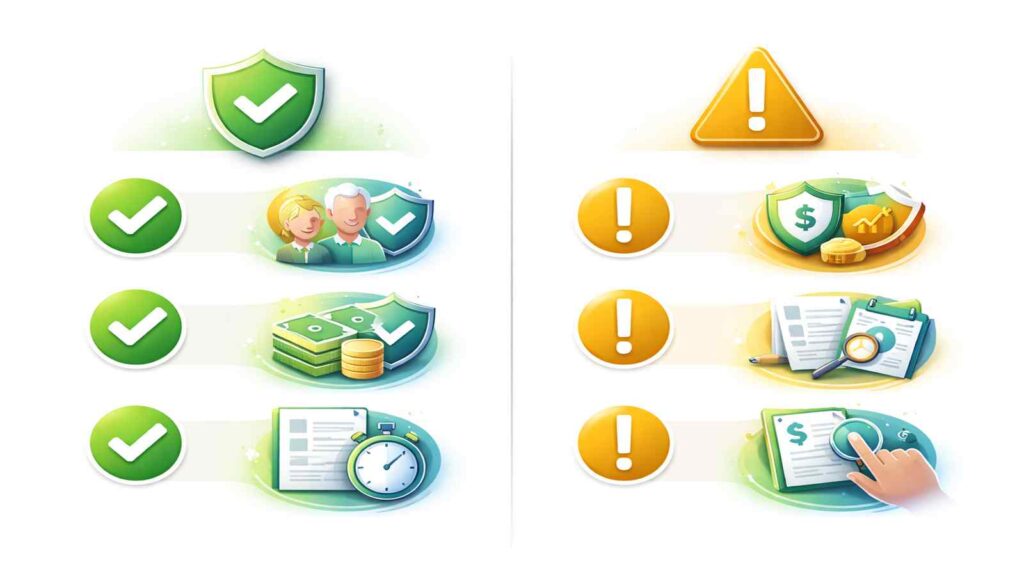
Looking at the advantages and limitations of final expenses insurance direct Canada helps create a balanced understanding of what this type of coverage does well—and what it is not intended to do. This clarity supports realistic expectations and informed decision-making.
Advantages
Simplicity
Final expenses insurance is designed to be straightforward. The coverage focuses on specific end-of-life costs, making it easier to understand and manage without navigating complex insurance structures.
Accessibility
Many people explore final expenses insurance direct Canada because it may be more accessible than traditional life insurance, particularly for older Canadians or those with health concerns. Simplified application processes can make coverage easier to obtain, depending on the policy.
Predictability
Premiums and coverage are typically predictable, helping individuals and families plan ahead with confidence. Knowing that funds will be available for final expenses can bring peace of mind.
Limitations
Final expenses insurance generally offers lower coverage amounts compared to traditional life insurance. This reflects its specific purpose rather than a limitation of the product itself.
Cost vs value considerations
Because the coverage is focused and accessible, it’s important to consider how the cost aligns with the expected benefit. Evaluating value rather than just affordability helps ensure the coverage fits the intended purpose.
Not designed for income replacement
Final expenses insurance is not meant to replace income, support long-term dependents, or fund broader financial goals. It is best viewed as a practical solution for managing end-of-life costs—not a comprehensive financial plan.
This balanced view of final expenses insurance direct Canada helps reinforce trust, which is essential for both readers and long-term search visibility.
Final Expenses Insurance vs Other Options

When considering final expenses insurance direct Canada, it’s helpful to compare it with other common ways Canadians plan for end-of-life costs. Each option serves a different purpose, and understanding the differences strengthens clarity and confidence in the decision.
Final expenses insurance vs term life insurance
Term life insurance is typically designed for income replacement over a set period of time. It often provides higher coverage amounts but may become more expensive or unavailable later in life. Final expenses insurance, by contrast, focuses on specific end-of-life costs and is generally chosen for its simplicity rather than long-term income protection.
Final expenses insurance vs permanent life insurance
Permanent life insurance offers lifelong coverage and may include additional features beyond covering final costs. However, it can be more complex and costly. Final expenses insurance is narrower in scope, with more modest coverage amounts and a clearer purpose, making it easier for those who want a focused solution.
Final expenses insurance vs personal savings
Some Canadians plan to use personal savings to cover funeral and related costs. While savings can be flexible, they may be impacted by market changes, unexpected expenses, or accessibility at the time they’re needed. Final expenses insurance direct Canada provides a dedicated benefit intended specifically for these costs, reducing uncertainty.
Final expenses insurance vs prepaid funeral arrangements
Prepaid funeral arrangements allow individuals to plan services in advance, but they are often limited to specific providers or services. Final expenses insurance offers more flexibility, allowing beneficiaries to choose how and where funds are used, based on circumstances at the time.
Comparing these options highlights why final expenses insurance is often viewed as a practical and focused tool, rather than a replacement for broader financial planning strategies.
Common Mistakes Canadians Make

When exploring final expenses insurance direct Canada, Canadians often encounter a lot of information—and sometimes marketing—that can make decisions less clear. Understanding common mistakes helps avoid unnecessary costs and ensures the coverage matches its intended purpose.
Over-insuring for final expenses
One common mistake is purchasing more coverage than is realistically needed for end-of-life costs. Final expenses insurance is meant to address specific, predictable expenses. Over-insuring can lead to paying higher premiums without adding meaningful value.
Confusing final expenses insurance with full life insurance
Final expenses insurance is sometimes mistaken for comprehensive life insurance. Unlike full life or term insurance, it is not designed for income replacement, estate planning, or long-term financial security. Confusing the two can lead to mismatched expectations.
Not understanding waiting periods
Some final expenses insurance policies include waiting periods before full benefits are payable. Failing to understand these terms can create confusion at claim time. Reviewing how coverage applies during the early years of the policy is an important part of informed planning.
Buying based on marketing instead of needs
Emotional or overly simplified marketing can sometimes push people toward decisions that don’t fully align with their situation. Focusing on actual needs—rather than promotional messaging—helps ensure that final expenses insurance direct Canada is chosen for the right reasons.
Avoiding these common pitfalls supports clearer, more confident decision-making and helps ensure final expenses insurance serves its intended purpose.
Frequently Asked Questions (FAQ

What Is Final Expenses Insurance in Canada?
Final expenses insurance in Canada is a type of life insurance designed to help cover end-of-life costs such as funeral services, burial or cremation, and related expenses. It focuses on providing a modest payout to ease the financial burden on loved ones rather than replacing income or funding long-term plans.
Is Final Expense Insurance Worth It?
Whether final expenses insurance is worth it depends on individual circumstances. It is often considered by those who want a simple, dedicated way to prepare for end-of-life costs, especially when savings are limited or traditional life insurance may not be suitable.
Does Final Expenses Insurance Require Medical Exams?
Many final expenses insurance policies do not require full medical exams. Instead, they may use simplified health questions. Requirements vary by policy, so understanding how health information is assessed is an important part of choosing final expenses insurance direct Canada.
How Much Coverage Is Usually Enough?
Coverage amounts are typically chosen to align with expected funeral and related costs. Because final expenses insurance is designed for specific purposes, coverage is usually more modest than traditional life insurance.
How Long Does It Take to Pay Out?
Once a claim is approved, final expenses insurance benefits are generally paid out relatively quickly. Timely payouts help beneficiaries manage funeral and administrative costs without unnecessary delays during a difficult time.
These answers provide practical clarity while reinforcing the role of final expenses insurance direct Canada as a focused and accessible planning option.
Conclusion: Planning for Peace of Mind
Planning for end-of-life costs is ultimately about dignity, simplicity, and preparedness. Exploring final expenses insurance direct Canada reflects a thoughtful approach to easing future responsibilities for loved ones, not a pessimistic outlook. By understanding how this type of coverage works, Canadians can make choices that align with their values and circumstances.
Preparing in advance is a practical and responsible step. It helps ensure that important arrangements are handled with clarity and care, reducing stress during an already difficult time. Final expenses insurance is one way some Canadians choose to bring structure and predictability to this part of planning.
If you’re researching final expenses insurance direct Canada, you’re asking the right questions. Taking the time to learn, compare options, and consider your personal situation is a meaningful step toward peace of mind—for yourself and for those who matter most.
If you’d like help understanding how final expenses insurance direct Canada fits into your personal situation, a brief conversation can help bring clarity. Everyone’s circumstances are different, and having the opportunity to talk things through can make the options easier to understand.

As a financial advisor, my role is to guide and educate, not to pressure or sell. If it would be helpful, you’re welcome to schedule a free, no-obligation conversation to review your questions and explore whether this type of planning makes sense for you—at your own pace.